
Moorhead City Directory Shelf
The Historical and Cultural Society of Clay County, or HCSCC, is the main shelf for historical Moorhead city directories. Its holdings statement reaches from 1884 forward, but that is not a promise that every annual volume survives or has been digitized. The online material identifies Moorhead directories for 1885, 1891, and 1915, plus a 1933 Rural Residents/Village Residents item. Use the online examples to establish a name or format, then ask about nearby years that remain in the archive.
| Collections | Years | Where Held | Access |
|---|---|---|---|
| Moorhead directory volumes | Holdings from 1884 forward; online 1885, 1891, 1915 | HCSCC, with related material at LARL, MSUM, and MNHS | Online samples, archive visit, or HCSCC research |
| Rural Residents/Village Residents | 1933 online item | HCSCC | Online item or archive inquiry |
| Clay tax rolls | 1870s; 1905, 1925, 1935, 1945, 1955, 1965, 1975 | HCSCC | On-site research or paid research |
| Federal and Minnesota census sets | Federal 1870, 1880, 1900, 1910, 1920; Minnesota 1875, 1885, 1895, 1905 | HCSCC, libraries, and archives | Research-room and genealogy tools |
A directory is dated evidence, not a complete roll of everyone in town. HCSCC warns that its volumes can omit people and carry misspellings. A name that does not appear may require checking a variant, a household member, a business listing, a boarder notation, or the next surviving edition.
Moorhead Directory Years at HCSCC
HCSCC is in the basement of the Hjemkomst Center at 202 First Ave N in Moorhead. Researchers may use the archive free on weekdays from 9:00 a.m. to 5:00 p.m. Remote help is available at $25 per hour with a half-hour minimum, advance payment, up to five copies and postage, and a 50 percent member discount. That route is useful when a needed directory year is not among the online samples.
The HCSCC archive research page documents the Moorhead materials that sit beside the directory volumes.
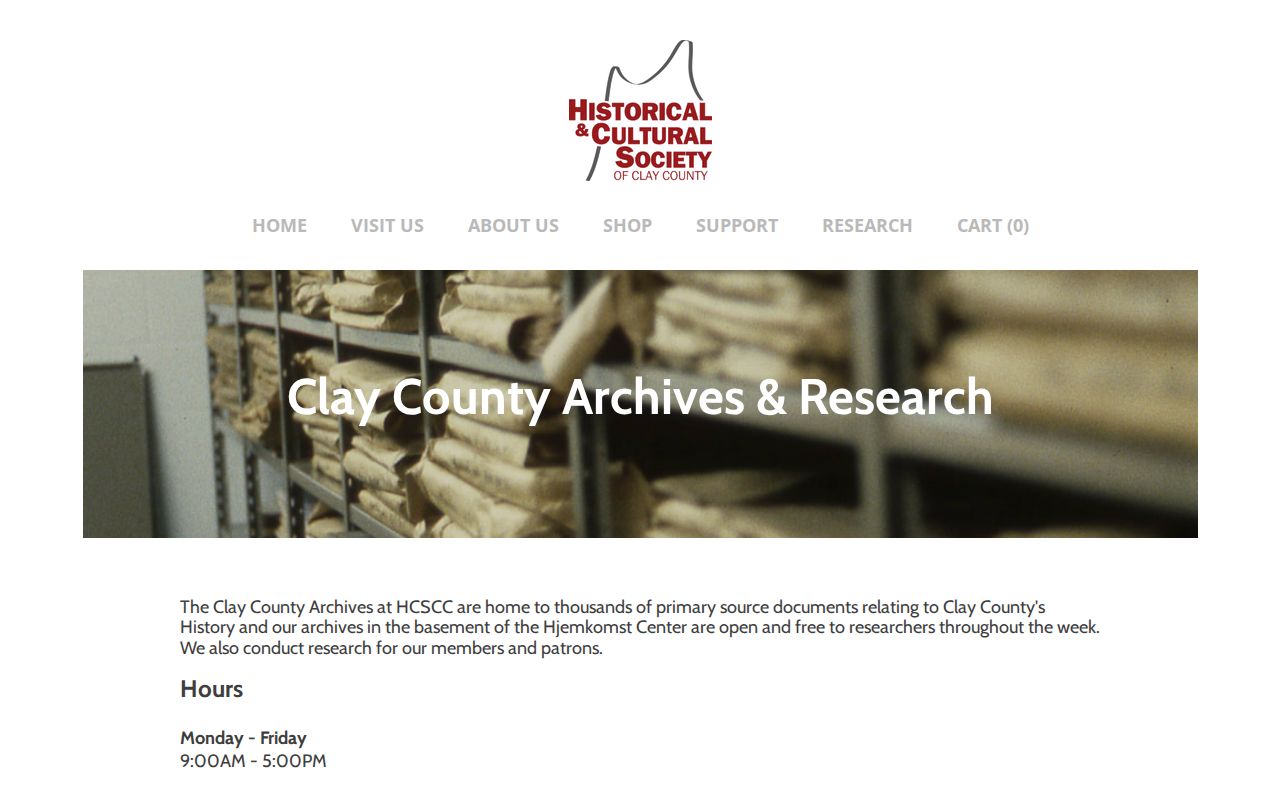
Tax rolls, census material, newspapers, plats, maps, photographs, and local ephemera give the archive a way to test an entry instead of treating one printed line as final proof.
The archive also holds Clay naturalization material, marriage and death indexes, World War I draft registrations, alien-registration material, and a large local photograph record. Those collections should be used only for the dated question they answer. A naturalization file, for example, can support a surname trail, while a newspaper or tax roll may be better evidence for a household in a particular year.
Moorhead Directory Research at LARL
Lake Agassiz Regional Library adds access channels that differ from an archive visit. Its genealogy service offers microfilm readers, regional newspapers and local publications, free library access to Ancestry and HeritageQuest, Minnesota Digital Library resources, interlibrary loan, and staff help. These tools are especially useful when a directory names a household but the next dated clue is more likely to be in a newspaper or a census image.
The Lake Agassiz Regional Library genealogy service describes the microfilm and research support available for Moorhead directory work.
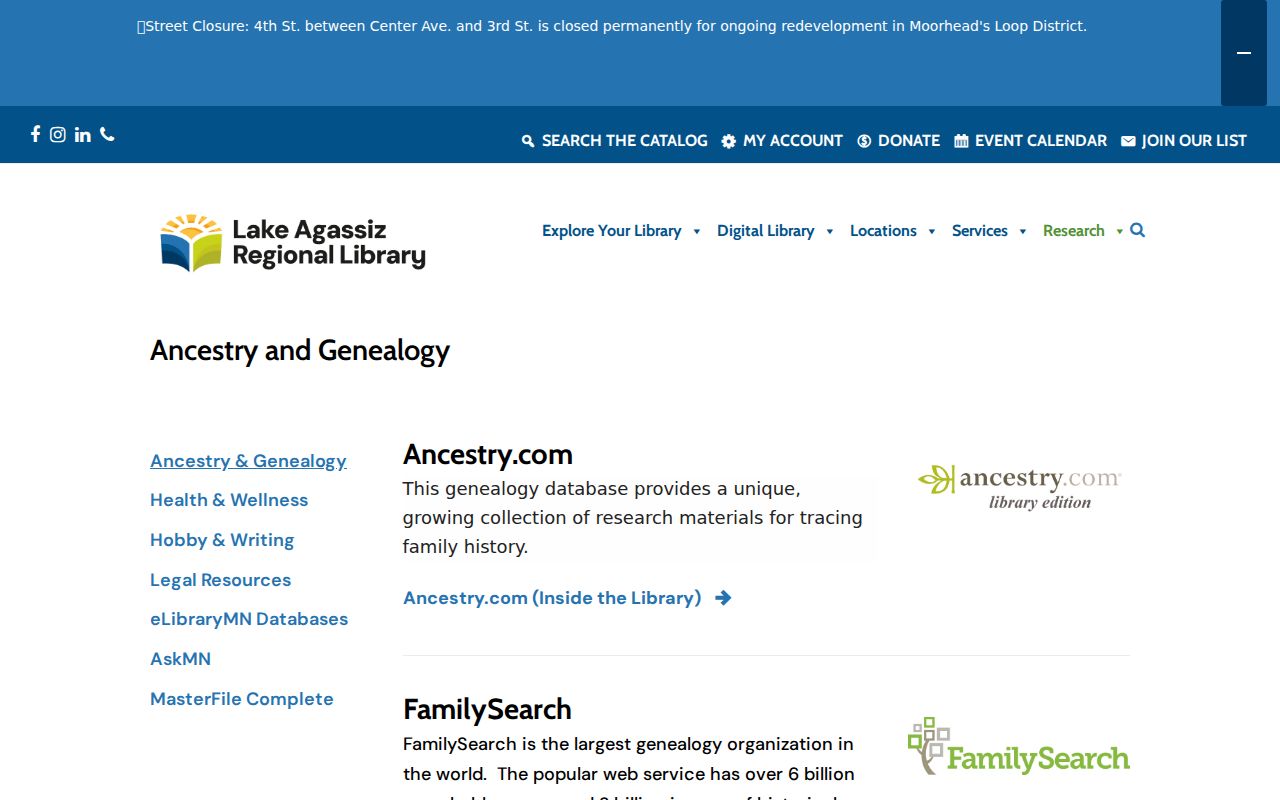
Library microfilm can bridge a Moorhead historical directory year to a contemporary local publication, while interlibrary loan can help locate a title outside the local shelf.
Note: LARL described The Loop as opening in Spring 2026, so confirm the current location and available equipment before planning an in-person microfilm visit.
Decode a Moorhead Directory Entry
The June 1891 C. C. Beckwith directory for Fargo and Moorhead can list a householder, adult children, address clue, occupation, employer, or a business proprietor. Its wording is compact. The documented example, “Anderson Charles, lab, bds e s 3d, 4 n of Garroway,” identifies Charles Anderson as a laborer who boarded on the east side of 3rd Street, four houses north of Garroway Avenue. It is a location relationship, not a modern numbered address.
| Name form | Record the surname, given name, initials, and spelling exactly as printed. |
|---|---|
| Household role | Distinguish a householder from an adult child, boarder, rooming entry, institution, or business listing. |
| Work detail | Occupation and employer can separate people with the same name in the same period. |
| Address clue | Copy the street, side, corner, and cross-street wording before trying to match a later address. |
| Business detail | A business entry can identify the proprietor, business type, and location. |
- Criss-cross source
- An address clue arranged by street or cross-street relationship rather than a modern reverse directory. The 1891 volume supplies this kind of evidence through its wording.
- Householder
- The person named for a household in a directory. A boarder or adult child can appear differently and should not be silently converted into a householder.
- Abbreviation key
- The directory’s explanation of short forms. Consult the HCSCC abbreviation list before expanding terms such as h, r, or bds.
Moorhead Directory Address Clues
Moorhead had east-west avenues and north-south numbered streets, but it had no house-numbering system until 1902. That fact changes how a historical name search should be read. An 1891 phrase such as “four houses north of Garroway” cannot be searched as if it were a later street number. First decode the abbreviation, identify the cross street, and compare the interval with a historic plat or Sanborn sheet before linking it to a later number.
The Sanborn sequence is unusually helpful for this task: Moorhead sheets exist for 1884, 1890, 1896, 1899, 1906, 1914, 1922, 1929, and 1956. The 1929 base was updated with 1956 paste-ups, so distinguish the base year from the later update when dating a structure or business use.
Moorhead Directory Tax Pairings
A name should move across record types in date order. HCSCC tax rolls identify taxpayers in selected years, while the census sets add household relationships for their census date. Newspapers may supply an obituary, notice, civic mention, or address transition. A Sanborn map places a building or use on a block. Each source answers a different question, which is why the best Moorhead historical directory research keeps the exact volume year next to every comparison.
| Date | Moorhead directory milestone |
|---|---|
| 1884 | Earliest Moorhead Sanborn year identified in the collection. |
| 1885 | Online Moorhead directory item and Minnesota state census year. |
| 1891 | Documented C. C. Beckwith entry format with cross-street descriptions. |
| 1902 | House numbering arrives in Moorhead, changing how later addresses relate to earlier clues. |
| 1915 and 1933 | Online Moorhead directory and Rural Residents/Village Residents items. |
Note: A tax payer or a directory householder is a record role for a date, not automatic proof of every person who occupied the location.
Trace Moorhead Directory Households
Start with the earliest verified spelling, then build a narrow timeline rather than trying to force every record into a single address. The steps below preserve the meaning of a Moorhead directory entry while connecting it to household and property evidence.
- Find the first directory appearance and transcribe the entry exactly, including initials, abbreviations, business wording, and address clue.
- Search the next available volume for the same name, alternate initials, and spelling variants. Mark moves, changed household roles, or a business address separately.
- Translate a pre-1902 cross-street entry before comparing it with a numbered address. Use a plat or Sanborn map to test the block.
- Pair the directory date with the nearest federal or Minnesota census and the appropriate HCSCC tax-roll year.
- Use newspapers, deed dates, probate material, or a later directory to distinguish a move, death, omission, or a new same-name household.
A disappearance from a directory has several possible meanings. It can reflect a move, death, a changed spelling, a missed entry, or a person who was not the listed householder. Preserve the uncertainty until a second dated source supports one explanation.
Moorhead Directory Archive Alternatives
MSUM’s Northwest Minnesota Historical Center holds the Moorhead Daily News from 1938 through 1957, Clay naturalization material from 1872 through 1954, and Moorhead Public Library records beginning in 1873. The MSUM collection guide is a useful route when a directory trail needs local newspaper or naturalization context. Minnesota Historical Society also provides research services for city directories, newspapers, atlases, manuscripts, state archives, and naturalization requests.
A historical directory find sometimes needs present-day confirmation. When the goal changes from a dated entry to a current record question, use the official tools described in the Moorhead resident search rather than extending an old listing beyond its date.
MSUM’s Clay County District Court naturalization collection includes eight reels, a general surname index, and a reel inventory. Minnesota Historical Society requests for historical naturalization records are listed as $10 for a digital copy or $15 for an official copy, with a usual three-to-four-week window that can extend to eight weeks. That service is a records-copy route, not a substitute for checking the directory, census, and newspaper dates first.
Moorhead Directory Gaps and Checks
No identified source promises an uninterrupted printed run, a modern reverse-directory series, or a public online obituary index for Moorhead. HCSCC death transcriptions, newspapers, library assistance, and archive research are the documented alternatives when an expected entry is absent. The historical society, LARL, MSUM, and Minnesota Historical Society each hold different pieces of the local record trail.
Note: Record the source, volume year, page, spelling, and access date for every Moorhead city directory find before drawing a family-history conclusion.